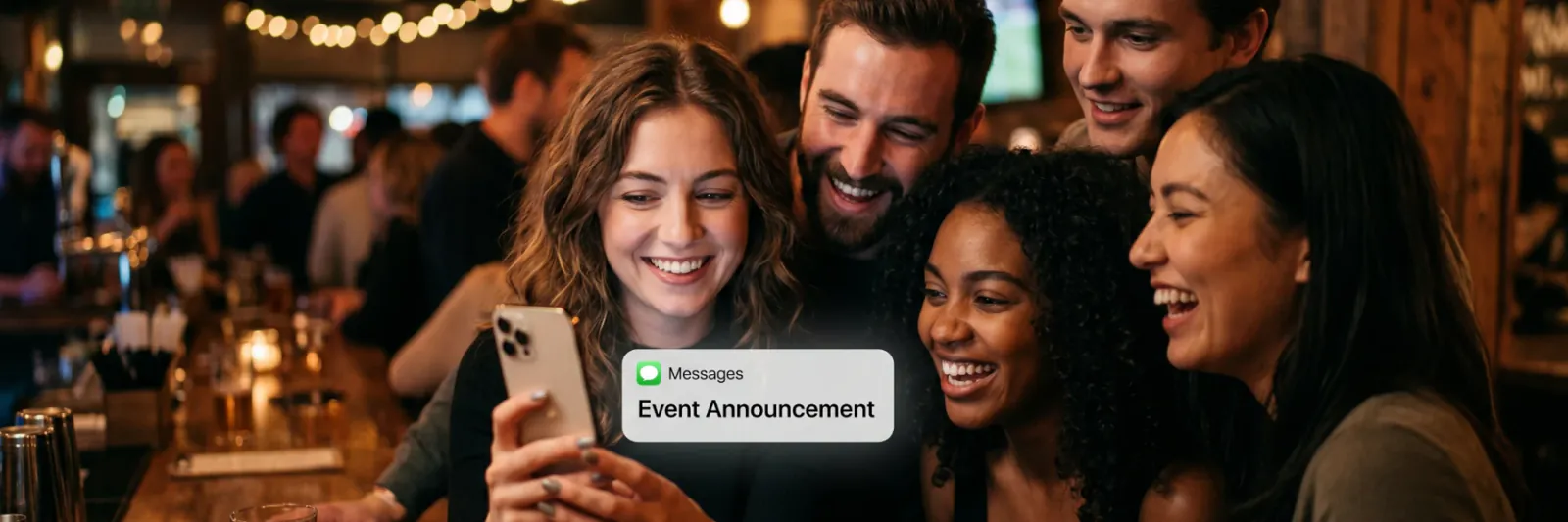
Why it works so well for events.
Events are time-sensitive by nature. There is a fixed date, a limited number of tickets, and a window where buying decisions are made. SMS is built for exactly this kind of urgency.
A well-timed SMS when tickets go on sale creates immediate action. A message to your pre-registration list giving them 48 hours of early access before general release drives FOMO and rewards your most engaged audience. A last-minute “final tickets” message to a targeted segment can be the difference between a strong event and a sell-out.
The key is that SMS does not compete with the algorithm. When you post on Instagram, you are hoping the platform decides to show it to the right people. When you send an SMS, it lands directly in their pocket. No feed. No algorithm. No guessing.
Segmentation is what makes it powerful.
Blasting your entire database with the same SMS is a waste of money. The real value of SMS marketing comes when it is paired with audience data.
Send a ticket drop announcement to people in Sydney only. Message previous attendees of a similar event with early access. Hit your VIP buyers with a first look before anyone else. Target people who pre-registered but have not purchased yet with a reminder as tickets start selling out.
This is where having your CRM, ticketing, and marketing tools in one platform matters. When your audience data and SMS tool live in the same system, segmentation takes minutes, not hours. On yourkind, you can filter your audience by 15+ data points including location, event history, ticket type, spend, and custom labels, then send a targeted SMS campaign directly from the same dashboard.
Do not overuse it.
SMS is a trust channel. Every message you send should feel like it was worth reading. If you start blasting promotional messages twice a week, your opt-out rate will climb fast, and every opt-out permanently reduces the size of your most valuable marketing channel.
The best approach is to reserve SMS for high-impact moments: ticket drops, early access for loyal fans, last-chance availability, and post-event follow-ups. Use email for the longer-form content like lineup announcements, event details, and recaps. Each channel does what it does best.
Pair it with email for the full picture.
SMS and email are not competing channels. They work best together. A common pattern for a new event announcement:
Send an email to your full database with the event details, visuals, and lineup. Follow up with a targeted SMS to your highest-intent segments, previous attendees, pre-registrations, and VIP buyers, with a direct link to purchase. Use a final SMS for urgency as the event approaches and tickets are running low.
The email does the storytelling. The SMS drives the action. Together they create multiple touchpoints without feeling repetitive because each message adds something different.
On yourkind, both email and SMS marketing are built in. You build your segments once and can reach them through either channel from the same platform. No switching between tools, no exporting lists, no syncing databases.
Compliance without the headache.
SMS marketing is regulated more strictly than email in Australia. You need explicit opt-in consent to send marketing messages, and recipients must be able to opt out easily.
yourkind handles this for you. Opt-out management is built into the platform so you stay compliant without manual work.
Start using it.
If you are running events in Australia and not using SMS marketing, you are leaving ticket sales on the table. It is the highest-impact direct channel available to you, and almost no one in the market is using it well.
yourkind has SMS and email marketing built into the same platform as your ticketing and CRM. No third-party tools. No disconnected data. Build a segment, write a message, and send it to the people most likely to buy.