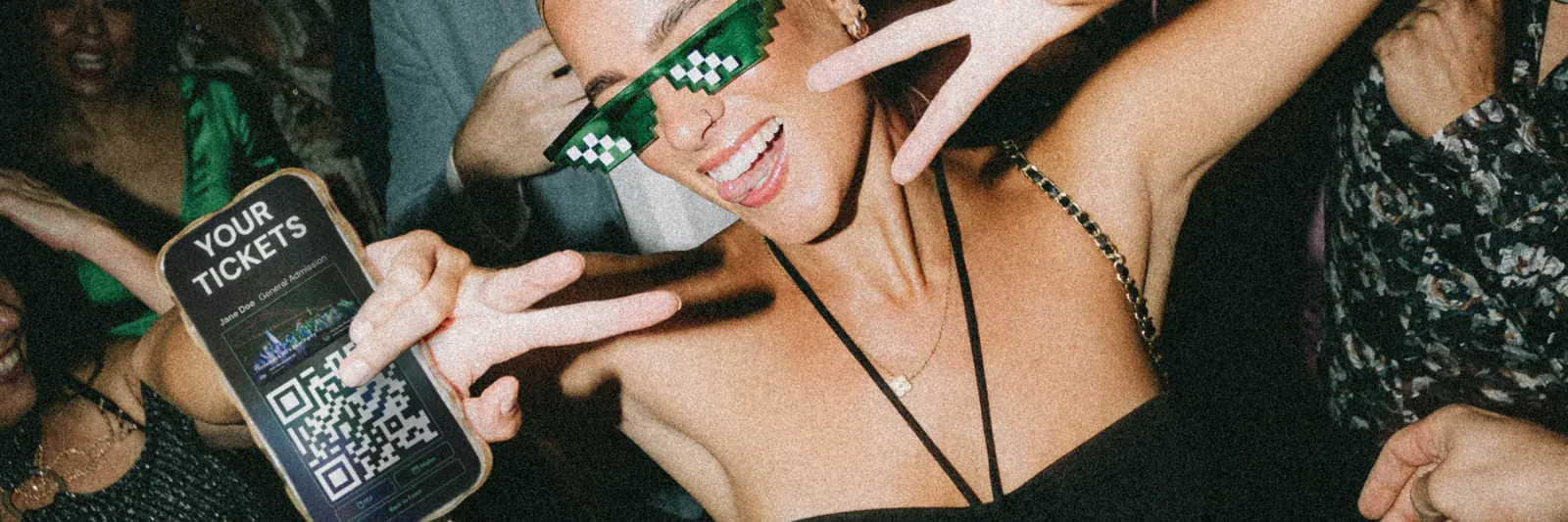
Ownership of the guest relationship returns to the organiser.
For most of ticketing history, the platform owned the customer. When you sold tickets through a major marketplace, they kept the buyer data. You got a door list and a payout. The guest relationship, name, contact details, purchase history, belonged to the intermediary, not the organiser.
This is changing. A new generation of platforms treats the organiser as the primary account holder, with every ticket buyer automatically added to an organiser-owned CRM. You keep the data. You own the relationship. And you can communicate with your audience directly via SMS and email, not just for this event but for everything you run in future.
The shift from platform-owned to organiser-owned relationships is probably the single biggest structural change in the industry right now. Platforms like yourkind are built entirely around this model. Every ticket sale builds your database, and that database is yours to segment, communicate with, and grow.
The all-in-one platform is replacing the tool stack.
For years, running events meant stitching together a ticketing provider, a separate email platform, an SMS tool, a spreadsheet for your guest list, and maybe a form builder for pre-registration. Each tool had its own login, its own data, and none of them talked to each other.
That is changing fast. Organisers are consolidating onto single platforms that handle ticketing, CRM, email marketing, SMS marketing, pre-registration forms, reviews, and branded event pages in one place. The benefit is not just convenience. When your ticketing data, audience data, and marketing tools live in the same system, you can do things that are impossible with a fragmented stack: send an SMS campaign to everyone who attended your last three events in Sydney, or exclude existing ticket holders from a paid ad audience on Meta.
This consolidation is one of the defining trends of 2026 and it disproportionately benefits independent organisers who previously could not afford or manage a multi-tool setup.
Community-driven events are growing faster than traditional formats.
Events built around a community identity, a specific subculture, a recurring audience, a shared aesthetic, consistently outperform one-off shows at similar price points. Repeat attendance rates for community-centric events are significantly higher than for traditional formats.
The practical implication for organisers is that the event itself is only part of the product. The community infrastructure, the communication channels, the between-event touchpoints, is equally important. Organisers who invest in keeping their audience engaged between events are building an asset that compounds over time. Those who treat each event as a standalone transaction are starting from zero every time.
This is where owning your audience data matters most. If you can send a targeted SMS to your most engaged attendees the moment your next event goes live, you are not competing for attention in a social media feed. You are talking directly to people who already trust your brand.
First-party data is replacing third-party data.
Third-party data is effectively dead for event marketing. What replaces it is first-party data collected at the point of registration: preferences, location, purchasing behaviour, communication opt-ins.
Organisers who have built structured data collection into their pre-registration and checkout flows are sitting on remarkably rich audience profiles that make every subsequent communication more targeted and more effective. A pre-registration form that captures name, email, phone, and location gives you enough to segment your audience by city, send a targeted SMS when tickets drop, and follow up with an email campaign days later.
The infrastructure to collect this data properly, forms with custom questions, automatic labelling, and direct integration with your CRM, has historically been fragmented across multiple tools. The consolidation of this into a single platform is one of the clearest trends of 2026.
Reviews and feedback are becoming a growth tool.
Post-event reviews have traditionally been an afterthought. Most organisers either do not collect them or rely on manual follow-ups that get lost in the noise. But the organisers seeing the highest repeat attendance rates are the ones who systematically collect feedback after every event and use it to shape the next one.
Automated review collection, triggered immediately after an event, captures sentiment while the experience is still fresh. That feedback serves two purposes: it gives you direct insight into what your audience loved and what to improve, and it creates social proof that helps sell future events.
What this means for independent organisers.
The net effect of all these trends is a structural advantage for independent organisers who adopt modern infrastructure early. The cost of reaching and retaining an audience is falling for those with clean first-party data and owned communication channels, while it is rising for those still dependent on marketplaces and paid acquisition.
The organisers who will thrive in 2026 and beyond are the ones who own their audience, communicate directly, collect data at every touchpoint, and use a single platform to run the whole operation. The investment in getting this infrastructure right today is not a cost. It is the foundation of a business that grows with every event.
yourkind is built for exactly this. Ticketing, CRM, email, SMS, forms, reviews, and branded event pages in one platform. No stitching tools together. No losing data between systems. Just one place to sell tickets, build your audience, and keep them coming back.